
Child to parent aggression and/or harm (CPA) can occur in any family situation. We support birth parents, single parents, kinship parents, foster carers, adoptive families, and parents/carers of children with SEND, and multiple complex needs.
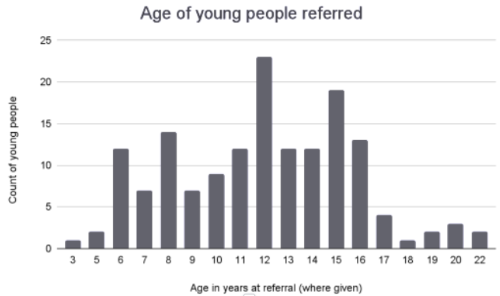
The age of children being referred to us over this period of time show distinct spikes:
- Aged 6 – 8 yrs – this can be attributed in some cases to Key stage jumps at school and higher expectations put upon them. This would fit in with the narrative from parents around school being a risk factor for children in these age groups.
- 12 yrs – this can be attributed in some cases to several factors including; Hormonal changes. Greater expectations and change in schooling. Peer influence and relationships, greater independence, taking risks on purpose, brain development.
There are many risk factors for children and what we do know is it is very rarely one thing but usually a combination of things that have a huge impact on a child and how they can respond.
Graph source; Capa First Response internal data 2022-2023.
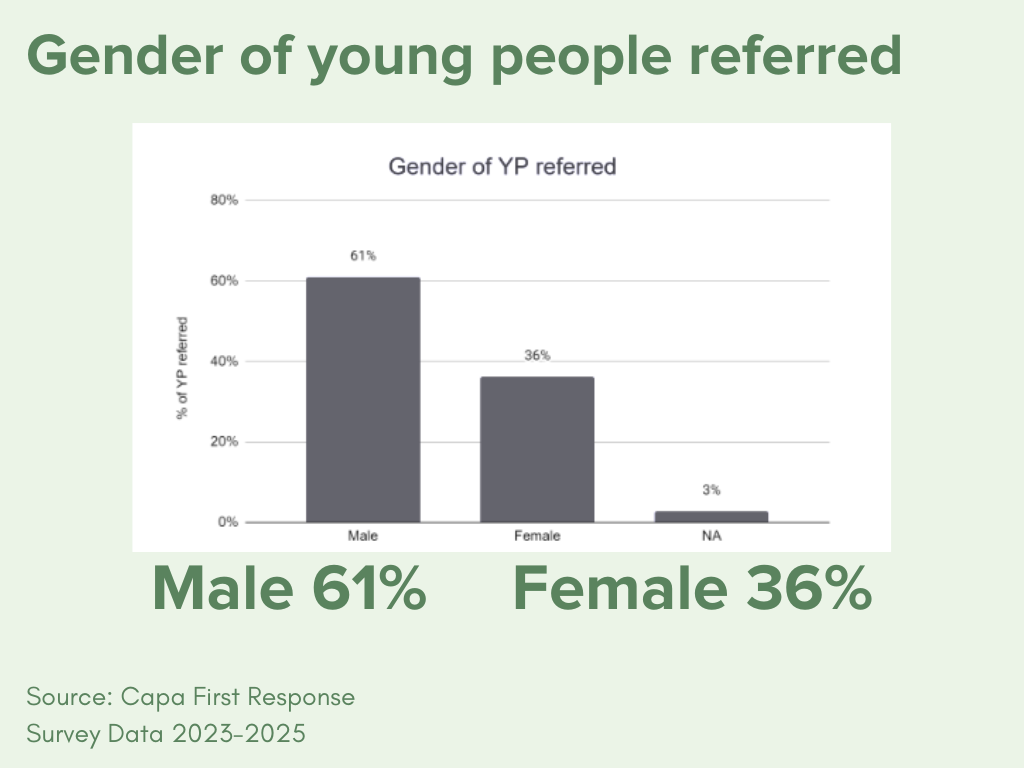
Historically, child-to-parent aggression and/or harm has often been framed as something boys do to their mothers. Research and our own practice show a more complex picture. Mothers and female carers remain disproportionately affected, but both sons and daughters use harmful behaviours, and this can be particularly pronounced where there is trauma and/or unmet neurodivergent need.
At present there is no robust UK-wide dataset that tracks trends in children’s gender over time, so any claims about a narrowing gender gap should be treated with caution. What is clear is the urgent need for consistent, national recording of CAPVA by gender, age and need, so that responses can be better designed.
Below is an indication of gender of children referred to Capa First Response services 2022-2023.
Scroll through the below examples of referrals received by Capa from parents and carers